
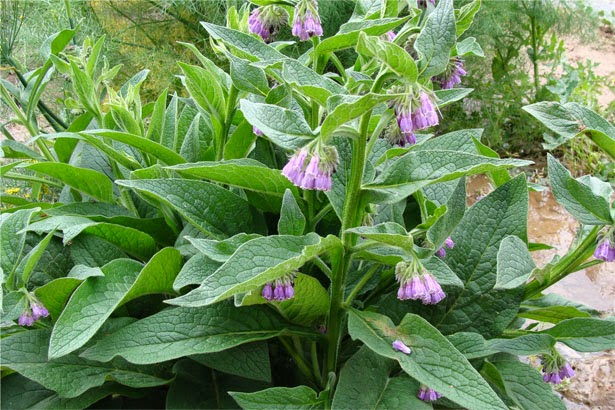
Today I want to talk about a magical and mysterious plant: comfrey.
Its name comes from the Latin “consolidates”, What does it mean “grow up together”.
It belongs to that group of plants whose uses seem almost unlimited throughout history.
It has been used as an aphrodisiac, antidepressant, leather tanning, as magic amulet, as an ornamental in medieval gardens ...
Formerly it was believed that nature put signs so that the man could recognize the properties of plants. In this case, it was the way the leaves are welded to the stem which revealed the healing power and welder Comfrey.
El famoso médico y botánico griego del siglo I Dioscorides Anarzabeo afirmaba que esta planta poseía el don de volver a unir, of rebinding bones and muscles. As it was used to tear, sprains and even breakages. But beyond its healing properties, the interesting thing is its esoteric facet as our ancient herberas the recommended to those travelers who demanded protection, taking her crushed in a bag in his left pocket.
Now comes the most fascinating:
La Consuelda tiene su fuerza en la raíz y rizoma. Tiene la mayor fuente conocida de proteínas vegetales y es una de las pocas plantas que extraen del suelo la vitamina B12, so important for life.
It is also very rich in tannins, compounds having the ability to protect the plant from external attacks and wounds. Consumed by humans provide the following properties:
Healing of wounds, antidote against poisons, antirust, antibacterial, anticolesterol, fat removal skin.
Besides all containing silicon, alantoína, mucilage, inulina, some essential oils, resins, starch, 20% silicic acid, hill, asparagina, porigolol, ázoe, football, potassium, phosphorus y germanium (anticancer and immunostimulating trace element) an alkaloid.
Substances with other many benefits, Attention: (extracted from the website “Margarita garden)
- Via internal use
* Enteritis and diarrhea
* Hemorrhoids
* All kinds of ulcers, particularly stomach and intestinal
* Stomach cancer
* Regeneration of mucosal tissues; general tissue regeneration
* Piorrea alveolar; for dentosa
* Retinal detachment; some vision problems
* ocular trauma
* capillary fragility
* Hematurias, cardinals
* Tuberculosas (hemoptisis)
* pleuresía; bronchitis; respiratory inflammations
* Sinusitis (relieve symptoms)
* Leucorrea; vaginismo; metrorragias
* Anginas
* Cholesterol
* Arteriosclerosis
* Disorders of the neuro-sensory system
* Problems of transplant rejection (support for)
* Osteopatías
* muscle strains; tendinitis; fractures
* Sagging tissues
- Via external use
* sores, Burns
* fistulas
* psoriasis; some types of eczemas
* varicose ulcers
* Cracks in the breasts
* anal fissures; Hemorrhoids / using the ointment and enemas)
* Leucorrea; Venereal diseases in women ( through irrigations)
* Torticulis
* Fractures and bone lesions
* tumors
* bone cancer
* Dolores amputation
* rheumatic pains
* Juanetes; limb deformities
* Bad circulation; varices
* ocular trauma
* Herniated discs; injuries of intervertebral discs
* Piorrea (using mouthwashes)
* Flaccidity (using vitalizing facial and body masks)
** A cotinuación I attached two important points about your website administration ecovisiones.cl
CAUTION TOXIC EFFECT Comfrey:
Its use should be limited to the topical form.
Prolonged via internal use is dangerous since it contains hepatotoxic pyrrolizidine alkaloids that can cause liver degeneration.
If considered appropriate prescribing, follow short treatments: no more than 4-6 weeks in a year.
THERAPEUTIC USE AND DOSE OF COMFREY:
Internal use (see precautions):
* decoction: one tablespoon per cup of dessert. Boil 5 minutes. Three cups a day.
* fluid extract (1:1): 20-30 drops, 2-3 times a day.
* Dye (1:10): 30-50 drops, 2-3 times a day.
* Dry extract (5:1): 50 mg / capsule, one to three a day.
* Dust: 100-300 mg, one to three times a day.
External use:
* decoction: 5%, infuse two hours, applied as washes or towels.
* Grated fresh root, applied as a poultice on the area to be treated.
* Ointment (20% fluid extract): 2-3 applications per day.
And remember:
"Wisdom is found in nature, not in laboratories "

Estupendo articulo. Gracias!! ❤
a ti preciosa! un besazo!